
When evaluating medical sharp containers, healthcare procurement officers are faced with an alphabet soup of certifications: UN 3291, BS 7320, ISO 23907, and ASTM D4169. Of these, ASTM D4169 is among the most rigorous performance standards applied to sharps disposal containers — and understanding what it actually tests can be the difference between choosing a container that holds up in the real world and one that fails when it matters most.
This guide explains the ASTM D4169 standard in plain language: what it tests, what the performance levels mean, and why YM Medic's ASTM-certified containers offer healthcare facilities a measurable safety advantage.
What is ASTM D4169? ASTM D4169 is the internationally recognised "Standard Practice for Performance Testing of Shipping Containers and Systems." When applied to medical sharps containers, it certifies that the container can withstand real-world physical stresses — vibration, compression, drops, and climate extremes — without structural failure or leakage.
Why Certification Matters for Sharp Containers
A sharp container that fails during transport — cracking under load, puncturing under impact, or leaking under humidity stress — is not just a product defect. It is a public health incident. Used sharps are classified as Category B Biological Substances under UN regulations, and their uncontained release exposes waste handlers, transport workers, and the general public to blood-borne pathogens including Hepatitis B, Hepatitis C, and HIV.
ASTM D4169 closes this gap. By subjecting containers to laboratory conditions that simulate the full journey from clinical use to final disposal — including vehicle vibration, stacking compression, accidental drops, and tropical humidity — it provides documented evidence that the container will maintain its integrity throughout that journey.
Important: Non-certified containers may appear identical to certified ones in physical appearance. The difference is not visible — it is verified only through independent laboratory testing under ASTM D4169 protocols.
What ASTM D4169 Actually Tests
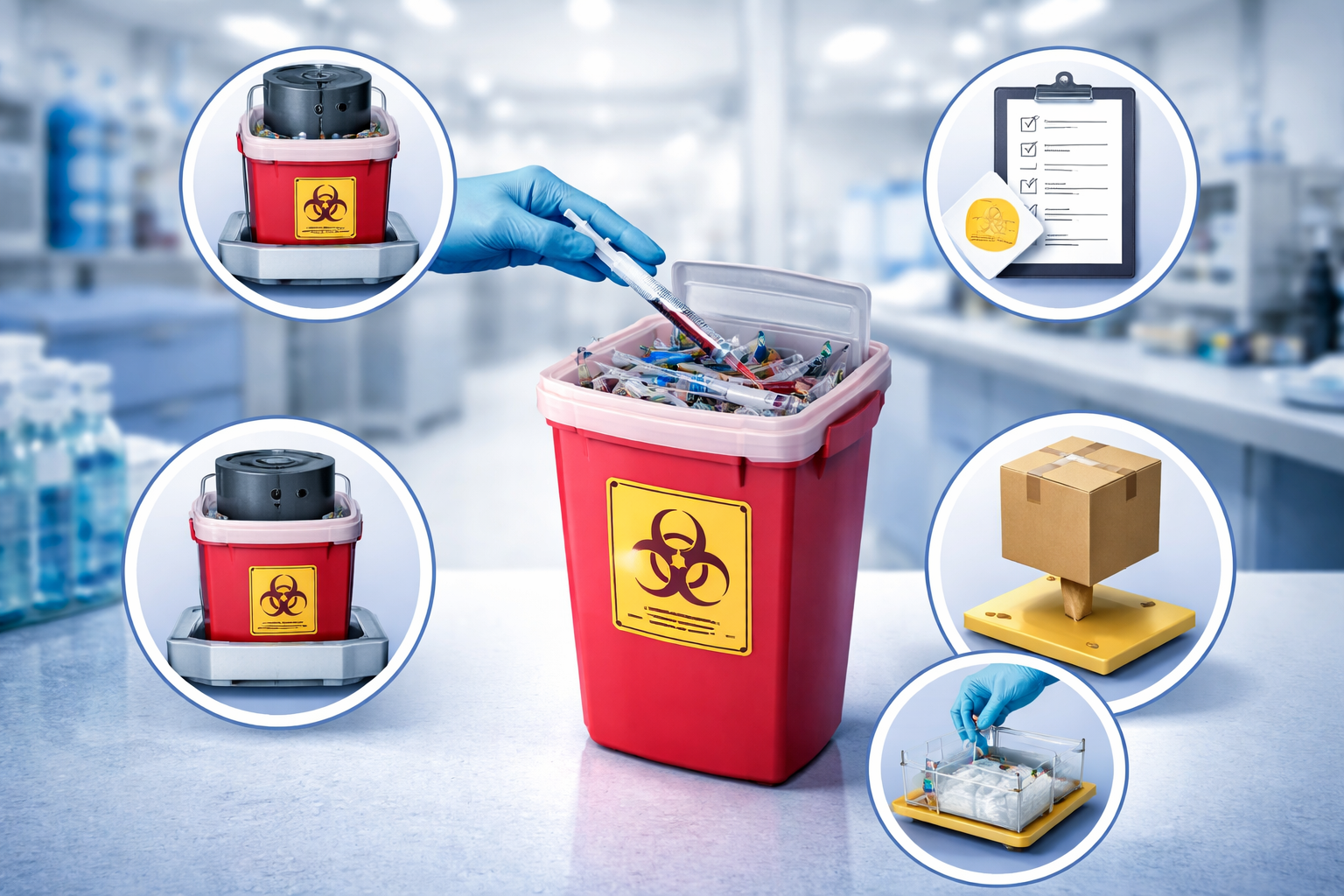
The standard subjects containers to a defined Distribution Cycle — a sequence of tests that simulate the stresses a container encounters from the moment it is filled in a clinical setting to its arrival at a waste treatment facility. For medical sharps containers, the relevant test sequences include:
Containers are conditioned at controlled temperature and humidity levels to simulate tropical, temperate, and refrigerated storage environments. Malaysia's hot-humid climate makes this particularly relevant — containers must not warp, soften, or degrade in ambient conditions exceeding 35°C.
Filled containers are placed on a vibration table that replicates the motion profile of road transport over various surface types. The test runs for an extended duration to simulate long-haul shipment. The container must show no seal failure, cracking, or contents spillage.
A static load — typically 56 kg for Level II — is applied to the top of the container to simulate stacking during storage and transport. The container must maintain its structural form without collapsing or deforming to the point that the lid seal is compromised.
The container is dropped from a specified height (1.2 m for Level II) onto a rigid surface in multiple orientations — flat face, edge, and corner. This simulates accidental drops during handling. The container must not crack, puncture, or allow any sharps to protrude.
A standardised steel probe is pressed against the container wall and lid under controlled force. ASTM D4169-certified containers for sharps must resist puncture from the contained waste itself — ensuring that even if a needle shifts in transit, it cannot pierce outward.
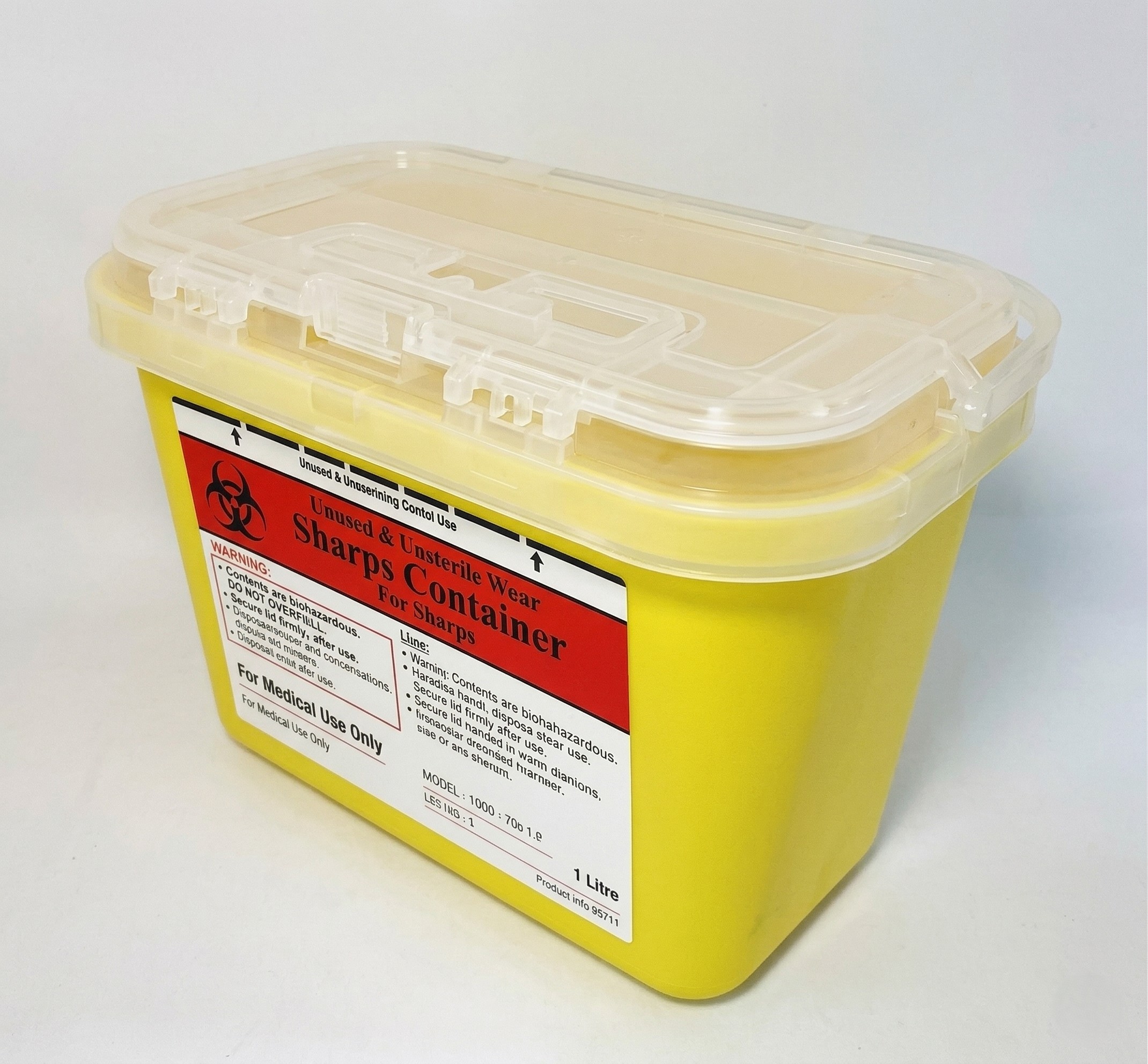
Fig. 1 — The YM Sharp Container: ASTM D4169 certified for vibration, compression, drop, and puncture resistance.
Understanding Performance Levels I, II, and III
ASTM D4169 defines three assurance levels based on how stringent the test conditions are. Healthcare facilities should select containers tested at the level appropriate to their distribution environment:
Level I — High Assurance
Most rigorous. Designed for containers distributed nationally or internationally through multiple handling stages. Highest drop heights, longest vibration duration.
International DistributionLevel II — Medium Assurance
For regional distribution within a country. Covers typical hospital-to-disposal-facility transport conditions. Balances cost-effectiveness with robust performance.
Hospital & Clinic UseLevel III — Minimum Assurance
Short-distance, controlled distribution only. Suitable for on-site disposal where containers do not travel far after sealing. Not recommended for multi-facility networks.
Local Disposal OnlyYM Medic containers are tested to Level II — the standard recommended for all hospital, clinic, and multi-site healthcare facility use in Malaysia and our export markets in Japan and the USA.
Certified vs. Non-Certified: A Direct Comparison
The practical difference between an ASTM D4169-certified container and an uncertified alternative becomes visible only under stress — which is precisely when a healthcare facility cannot afford a failure:
| Performance Criterion | ASTM D4169 Certified | Non-Certified Container |
|---|---|---|
| Seal integrity after transport vibration | Verified | Unknown |
| Resistance to 1.2 m accidental drop | Tested | Not Tested |
| Withstands 56 kg stacking compression | Tested | Not Tested |
| Performance in tropical humidity | Climate Conditioned | Unverified |
| Puncture resistance (needle-side out) | Verified | Unknown |
| Compliance for export (Japan, USA) | Accepted | Not Accepted |
| Documentation for MOH procurement | Available | Not Available |
ASTM D4169 and Other Standards
Procurement officers often encounter multiple certification names. Here is how ASTM D4169 relates to other standards commonly cited for medical sharps containers:
- BS 7320 (British Standard) — focuses on sharps container design and performance in clinical use (not transport). Complementary to ASTM D4169, not a substitute.
- UN 3291 — a transport classification marking for clinical waste, not a performance test. A container can carry the UN 3291 marking without having passed ASTM D4169 testing.
- ISO 23907 — an international standard for sharps injury protection devices, covering design features rather than transport durability.
- MS 2558 — Malaysia Standard for disposable medical sharps containers, consistent with ASTM D4169 testing requirements for local MOH compliance.
Fig. 2 — ASTM International certification is recognised in over 180 countries and required for export to the USA and Japan.
YM Medic's ASTM Compliance
All YM Sharp Containers are manufactured at our facility in Ipoh, Perak, and subjected to third-party ASTM D4169 Level II testing before being approved for distribution. Our certification covers:
- All standard sizes: 1L, 2L, 3L, 5L, and 8L sharp containers
- Both standard and biohazard-labelled variants
- Products distributed domestically in Malaysia and exported to Japan and the USA
- Each production batch — not just the initial design approval
Certification documentation is available upon request for MOH procurement processes, hospital tender submissions, and import compliance verification for international buyers.
Need ASTM D4169 test reports for a tender or procurement application? Contact YM Medic — our team will provide the relevant certificates and technical documentation within 24 hours.
What to Ask Your Supplier
Before purchasing sharp containers for your facility, ask these five questions to verify genuine ASTM D4169 compliance:
- Which testing laboratory conducted the ASTM D4169 tests? — Should be an accredited third-party lab, not self-tested.
- What performance level was tested — I, II, or III? — Ensure it matches your distribution environment.
- Is the certification current and batch-specific? — An original design certificate does not guarantee ongoing batch quality.
- Does the certificate cover the specific size and variant you are purchasing? — Certification is size and design-specific.
- Can you provide the full test report, not just the certificate? — The detailed report shows exact pass/fail data for each test sequence.
Conclusion
ASTM D4169 certification is not a marketing badge — it is documented, third-party evidence that a sharp container can withstand the physical stresses of real-world clinical and transport environments without compromising containment. For healthcare procurement officers, specifying ASTM D4169-certified containers is one of the most straightforward ways to reduce liability, protect waste handlers, and ensure regulatory compliance across the full disposal chain.
YM Medic Sdn Bhd manufactures ASTM D4169-certified sharp containers designed specifically for the demands of Malaysian healthcare facilities and the export markets we serve in Japan and the United States. We are committed to full transparency — ask us for our test documentation today.
.png)
Leave a Comment
Share your thoughts or questions