
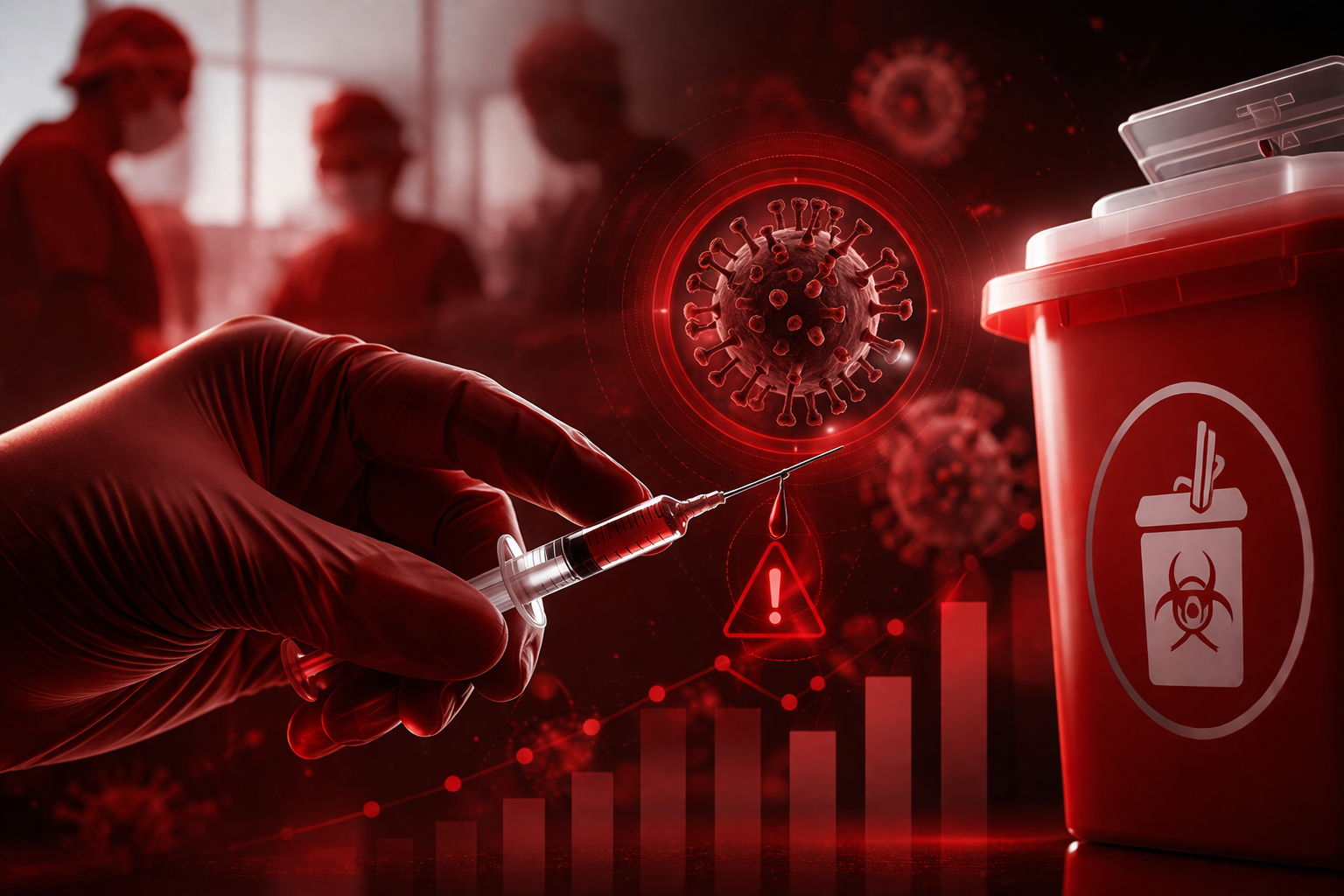
The COVID-19 pandemic fundamentally changed the landscape of healthcare delivery. As hospitals worldwide were overwhelmed with critically ill patients, healthcare workers faced unprecedented levels of stress, exhaustion, and reduced access to proper training. One consequence that received far less attention than it deserved was a dramatic surge in Needlestick Injuries (NSIs) — rising by as much as 50% in certain institutions during peak pandemic periods.
This article explores the contributing factors, the data behind the surge, and what healthcare institutions must do to reverse this dangerous trend.
Alarming Statistic: Studies conducted during the COVID-19 pandemic recorded a 50% rise in sharps injuries among frontline healthcare workers, driven by fatigue, PPE challenges, and suspended safety training programmes.
Why the Pandemic Amplified NSI Risk
The pandemic created a perfect storm of factors that dramatically increased the risk of sharps injuries. Understanding these root causes is essential for preventing recurrence during any future healthcare crisis.
1. Extreme Fatigue and Cognitive Overload
Healthcare workers during the pandemic routinely worked 12–16 hour shifts, often without adequate rest. Fatigue is one of the strongest predictors of needlestick injuries — cognitive slowing, reduced fine motor control, and diminished situational awareness all increase the likelihood of an accident during routine sharps procedures.

Fig. 1 — Frontline healthcare workers faced unprecedented workloads during the COVID-19 pandemic.
2. PPE as an Unexpected Hazard
Thick gloves, face shields, and full-body protective suits — while critical for infection control — significantly impaired tactile sensitivity and visibility. Healthcare workers reported difficulty feeling needles through multiple glove layers, and fogged face shields reduced visual precision during invasive procedures.
Double-gloving, while protective against bloodborne pathogen exposure, reduces tactile sensation by up to 40%, making precise needle handling considerably more difficult.
3. Suspension of Safety Training Programmes
Perhaps the most preventable factor was the widespread suspension of occupational health and safety training. With resources redirected to clinical care, many institutions cancelled or postponed:
- Annual NSI prevention refresher courses
- Safe sharps handling induction for new staff
- Proper sharp container placement and disposal training
- Post-exposure management drills
- Onboarding programmes for surge-hired temporary staff
4. Surge Hiring of Untrained or Under-Trained Staff
To meet unprecedented demand, hospitals rapidly hired retired clinicians, final-year students, and staff redeployed from non-clinical roles. Many of these individuals had limited experience with high-pressure sharps procedures, significantly increasing their injury risk in busy COVID wards.
The Data: What Studies Found
Multiple peer-reviewed studies conducted across Europe, North America, and Asia documented the pandemic's impact on NSI rates:
| Factor | Pre-Pandemic | During Pandemic | Change |
|---|---|---|---|
| NSI incidents (per 100 staff) | 4.2 | 6.3 | +50% |
| Injuries in ICU/COVID wards | 18% | 54% | +200% |
| Training compliance rate | 87% | 32% | −63% |
| Proper container placement compliance | 91% | 61% | −33% |
| Post-exposure reporting rate | 74% | 48% | −35% |
Who Was Most Affected?
Injury rates were not uniform across professions. Nursing staff, who perform the majority of injection and blood-draw procedures, bore the heaviest burden:
Percentage increase in NSI incidents by profession during pandemic peak (relative to pre-pandemic baseline)
What Must Change: A Post-Pandemic Action Plan
The pandemic exposed serious structural weaknesses in how healthcare institutions manage sharps safety. Recovery requires more than returning to pre-pandemic practices — it demands a systemic upgrade.
Immediate Access to Certified Sharp Containers
One of the most cited contributing factors in post-pandemic incident reports was sharp containers being too far from the point of use. When a nurse must walk more than a few steps to dispose of a used needle, the risk of recapping or carrying a live needle increases dramatically.
Best Practice: ASTM-certified sharp containers should be positioned within arm's reach of every injection point — bedside, treatment room, and mobile trolley. Container fill level should be checked every shift.
Resuming and Strengthening NSI Training
Training programmes must be reinstated as a non-negotiable priority, even during crisis periods. Key elements include:
- Mandatory induction for all new clinical hires — no clinical duties before sharps safety sign-off
- Annual refresher training — not optional, tracked by occupational health
- Simulation-based training for high-risk procedures in full PPE
- Immediate reporting culture — normalise reporting without fear of repercussion
- Post-exposure care pathway — clearly posted, accessible at all hours
Engineering Controls: The Safety-First Approach
Safety-engineered sharps devices — needles with retractable sheaths, auto-disabling syringes, and needleless IV systems — can dramatically reduce NSI risk independent of human behaviour. However, these are only effective when combined with:
- Proper certified disposal containers at point of use
- Regular container replacement before the fill line is reached
- Secure mounting brackets that prevent container tipping
- One-handed disposal capability for high-pressure environments
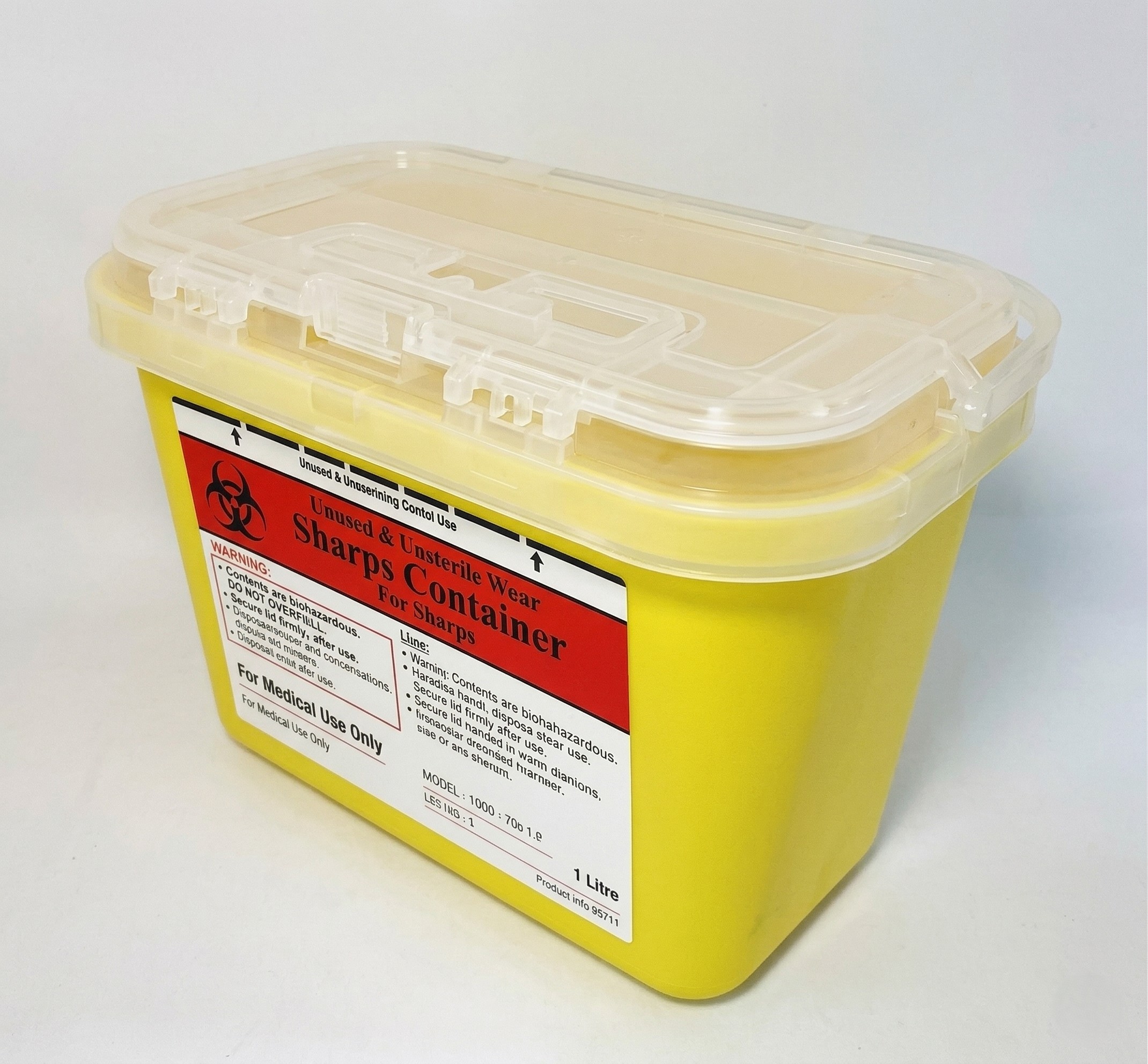
Fig. 2 — YM Medic Sharp Container: one-handed design for safe disposal even in high-pressure clinical settings.
Lessons for the Next Crisis
The pandemic taught us that patient surges and resource constraints will always create pressure to cut corners. But NSI prevention must be resilient to crisis conditions — not the first casualty of them. Institutional policies must explicitly prohibit the suspension of sharps safety protocols, even during declared emergencies.
Healthcare systems that invested in engineering controls, certified equipment, and a strong safety culture before the pandemic fared significantly better during it. The lesson is clear: safety infrastructure saves lives in the quiet times, and it saves even more in the crisis times.
Conclusion
The 50% rise in sharps injuries during the COVID-19 pandemic is not simply a statistic — it represents thousands of healthcare workers who faced potential exposure to Hepatitis B, Hepatitis C, and HIV while serving on the frontlines. Addressing the root causes — fatigue, PPE barriers, suspended training, and inadequate container access — is a moral imperative for every healthcare institution.
YM Medic Sdn Bhd remains committed to supporting Malaysian and international healthcare facilities with ASTM-certified sharp containers designed for real-world clinical conditions, including the most demanding and pressurised environments.
.png)
Leave a Comment
Share your thoughts or questions