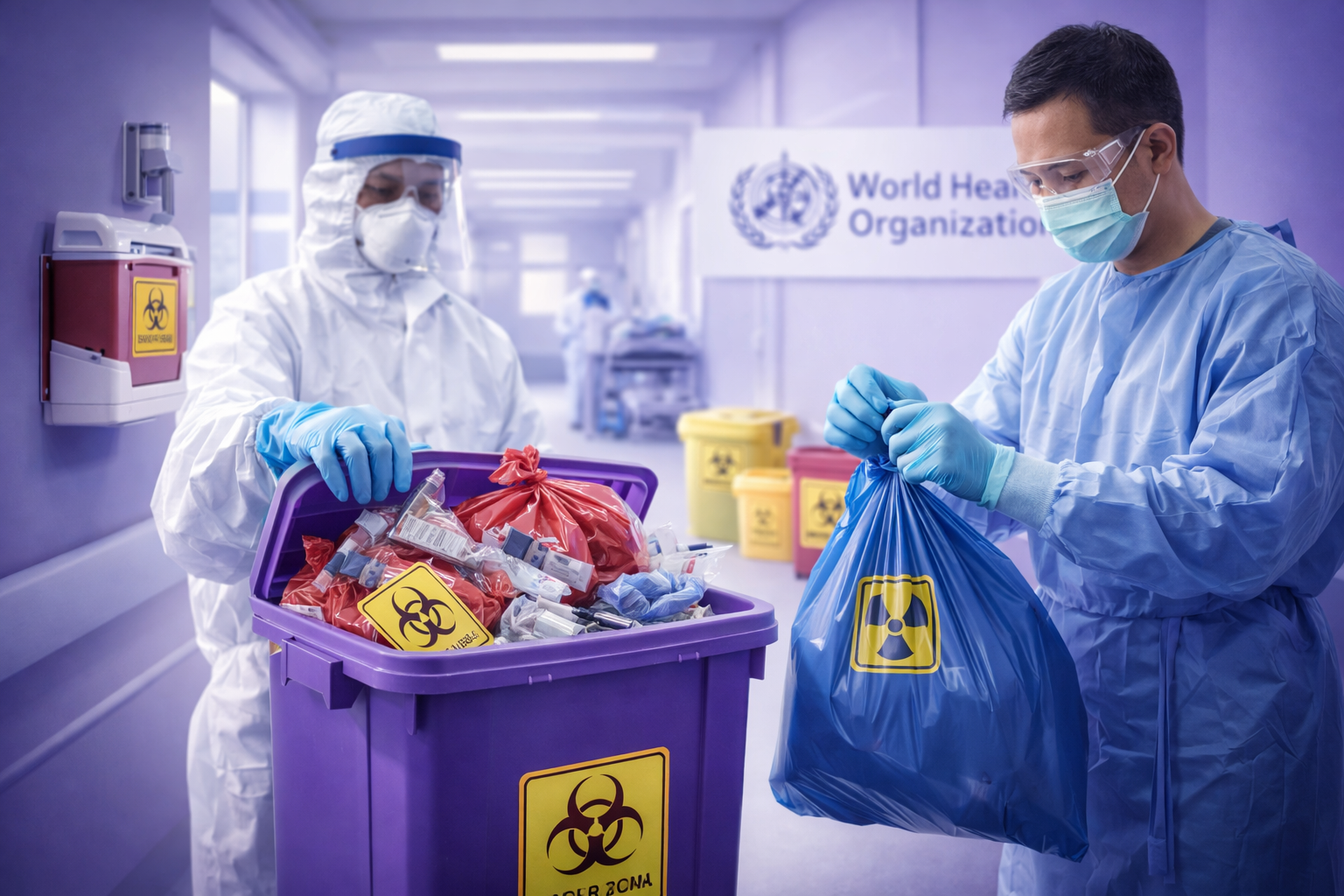
Medical waste is one of the most hazardous by-products of healthcare delivery. Improperly managed, it poses serious risks to healthcare workers, waste handlers, patients, and the wider community. The World Health Organization (WHO) estimates that 85% of waste generated by healthcare facilities is non-hazardous general waste — but the remaining 15% is infectious, toxic, or radioactive, and demands rigorous management throughout its entire lifecycle.
This guide summarises the WHO's framework for medical waste classification, segregation, handling, and disposal, with specific focus on sharps waste — the category most relevant to hospitals, clinics, and diagnostic laboratories.
WHO Definition: Medical waste includes all waste generated in healthcare facilities, research centres, and laboratories related to medical procedures. It encompasses infectious waste, sharps, pathological waste, pharmaceutical waste, chemical waste, and radioactive waste.
WHO Classification of Medical Waste
The WHO classifies healthcare waste into eight major categories. Each requires specific handling, storage, and disposal procedures. Incorrect classification is one of the most common causes of regulatory non-compliance and safety incidents in healthcare facilities.
Waste contaminated with blood, body fluids, or other biological materials. Includes used dressings, swabs, laboratory cultures, and materials from infectious disease patients.
Needles, syringes, scalpels, lancets, broken glass, and any item that can cause cuts or puncture wounds. High priority — requires certified puncture-resistant containers.
Human tissues, organs, blood products, and body parts. Also includes animal tissues from research and veterinary settings. Requires incineration or specific burial.
Expired, unused, contaminated, or returned drugs and vaccines. Includes cytotoxic drugs requiring specialist disposal. Must not be flushed or discarded in general waste.
Disinfectants, solvents, reagents, batteries, and heavy-metal-containing equipment (thermometers, blood pressure devices). Regulated under hazardous chemical disposal laws.
Packaging, paper, food waste, and items that have not been in contact with patients or infectious materials. Treated as municipal solid waste — no special disposal required.
International Colour Coding System
WHO recommends a standardised colour-coding system for waste containers to enable consistent segregation at the point of generation. Healthcare facilities should train all staff to identify and use the correct container for each waste category:
| Container Colour | Waste Type | Treatment Method |
|---|---|---|
| Yellow | Infectious & pathological waste, anatomical waste | Incineration or autoclaving |
| Red (rigid sharps container) | Sharps — needles, syringes, blades, lancets | Incineration or autoclaving + encapsulation |
| Blue / White | Pharmaceutical waste (non-cytotoxic) | Return to manufacturer or high-temperature incineration |
| Black | General non-hazardous waste | Municipal solid waste landfill |
| Brown | Chemical and pharmaceutical (cytotoxic) | Specialist chemical disposal facility |
Critical: Mixing sharps with general waste — even accidentally — elevates general waste to the regulatory status of clinical waste, triggering significantly higher disposal costs and potential regulatory penalties.
Sharps Waste: The Highest-Priority Category
Among all healthcare waste categories, sharps waste demands the most immediate and structured management response. Unlike other waste types, a single unsecured sharp can cause irreversible harm — a needlestick injury that exposes a waste handler to Hepatitis B, C, or HIV.
WHO guidelines for sharps waste are specific and non-negotiable:
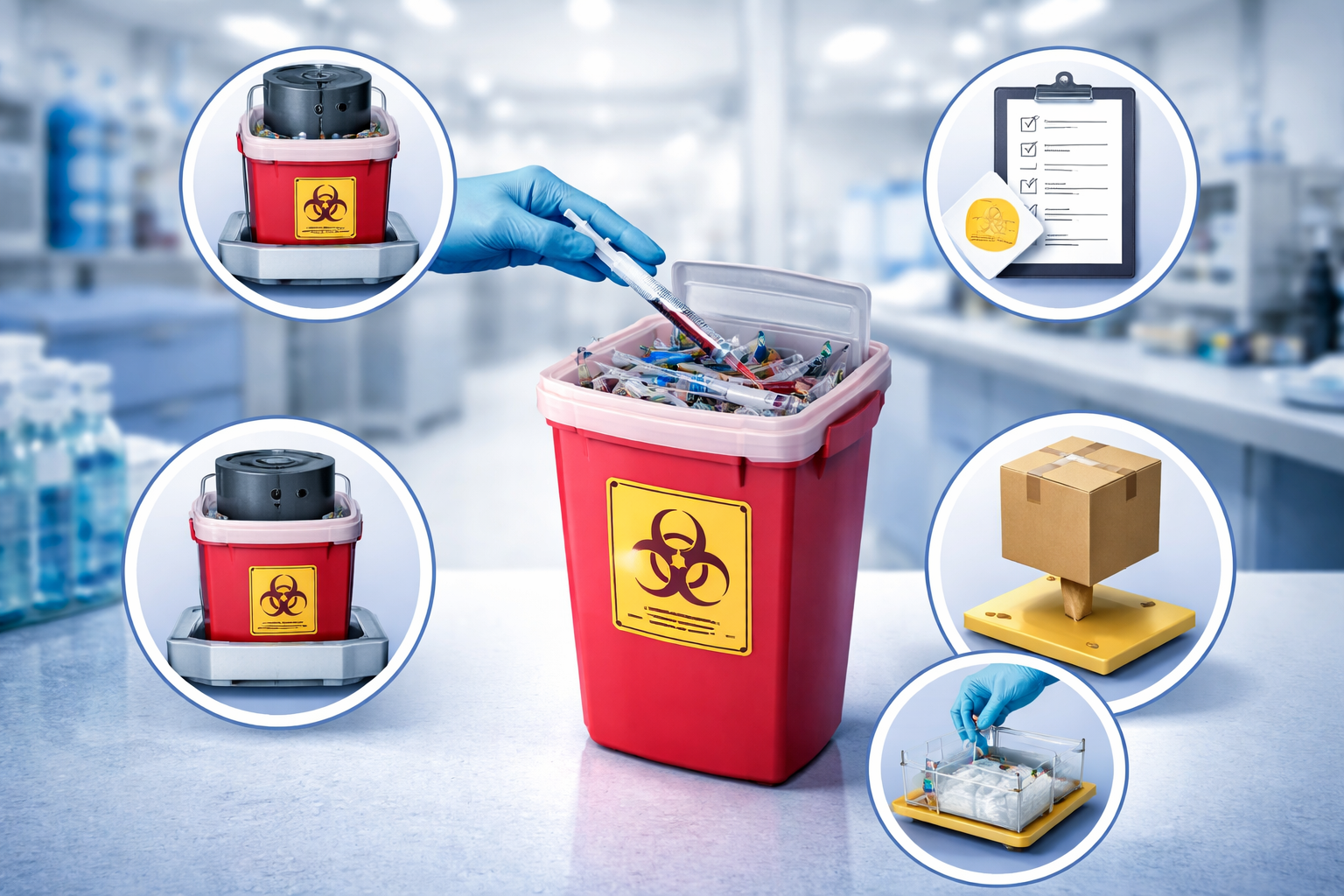
- Sharps must be discarded immediately at the point of use into a certified puncture-resistant container
- Containers must be UN-approved or nationally certified (e.g., ASTM D4169, MS 2558)
- Containers must never be filled beyond the 75% fill line
- Full containers must be permanently sealed — no reopening for any reason
- Sealed containers must be labelled with the biohazard symbol, facility name, date sealed, and waste category
- Containers awaiting collection must be stored in a secure, locked waste holding area accessible only to authorised personnel
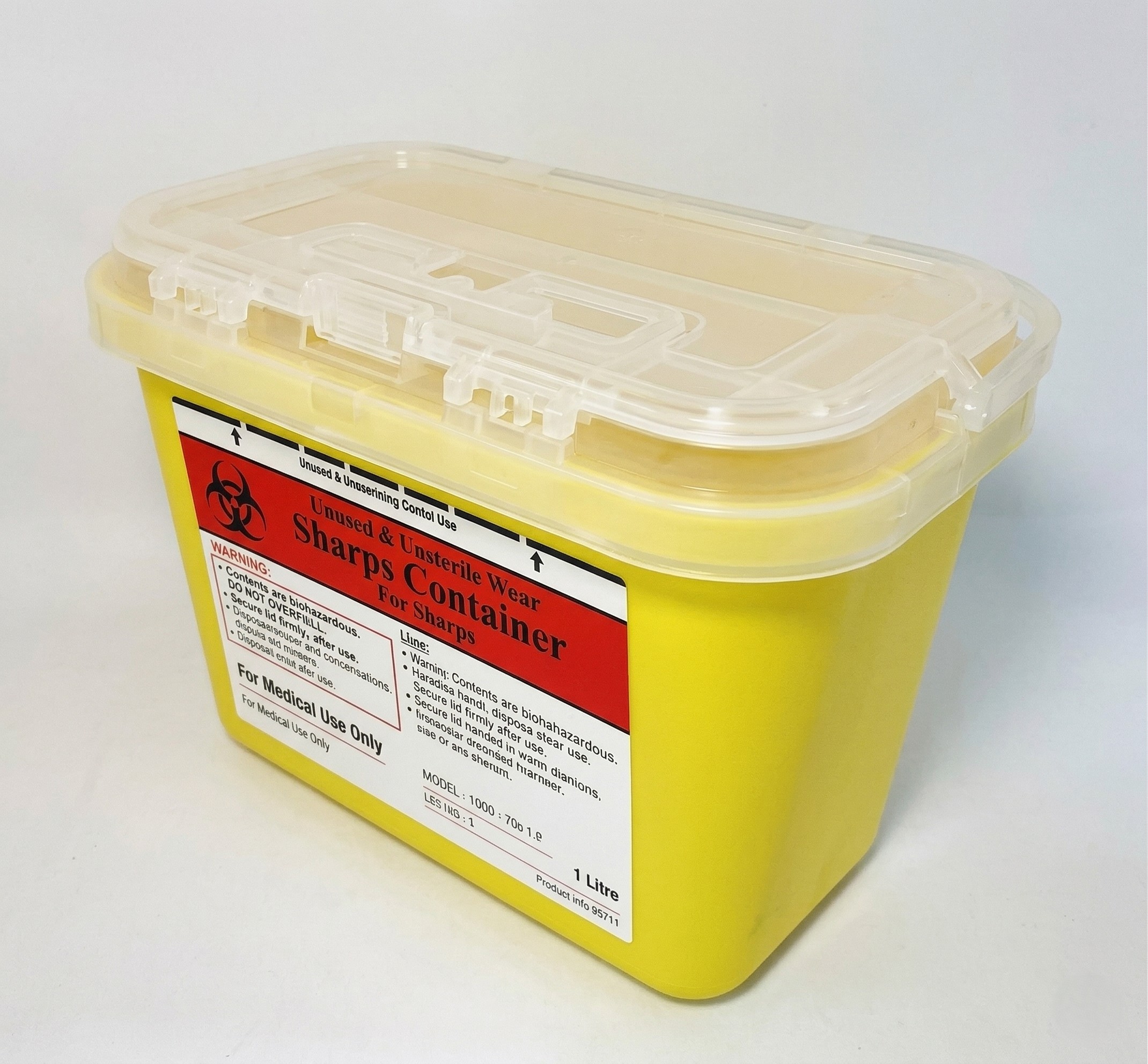
Fig. 1 — The YM Medic Sharp Container: puncture-resistant, tamper-evident, and compliant with WHO sharps disposal specifications.
The Complete Medical Waste Management Chain
WHO describes medical waste management as a cradle-to-grave responsibility — healthcare facilities are accountable for waste from the moment it is generated until it is safely treated and disposed. The full chain consists of seven stages:
Waste is separated at the point of origin into the correct labelled container. This is the most critical step — errors here propagate through every subsequent stage.
Trained waste handlers — in appropriate PPE — collect sealed containers from clinical areas on a defined schedule (minimum once per shift for sharps). Containers are never carried by hand without a rigid holder.
Collected waste is held in a dedicated, ventilated, lockable waste storage room. Sharps containers are segregated from other waste streams. Maximum holding time: 48 hours in tropical climates.
Licensed contractors transport waste in approved, leak-proof vehicles with hazardous materials markings. A waste manifest (consignment note) must accompany every shipment and be retained for audit.
Sharps are treated by incineration, autoclaving (steam sterilisation), or encapsulation. The method depends on the volume, local infrastructure, and national regulatory requirements.
Treated residue is disposed of in a licensed sanitary landfill or, for incineration ash, a secure industrial landfill cell. Untreated clinical waste must never reach general landfill.
Complete records of all waste generated, transferred, treated, and disposed of must be maintained. WHO and most national regulators require waste registers to be kept for a minimum of 3–5 years.
Medical Waste Regulations in Malaysia
In Malaysia, medical waste disposal is governed by a robust regulatory framework that broadly aligns with WHO guidelines:
| Regulation | Scope | Key Requirement |
|---|---|---|
| Environmental Quality Act 1974 | All scheduled waste including clinical waste | Illegal to dispose of scheduled waste without a licence |
| Scheduled Wastes Regulations 2005 | SW401 — clinical waste (incl. sharps) | Licensed contractor required; waste manifest mandatory |
| MS 2558 | Disposable medical sharp containers | Containers must meet puncture, leak, and closure standards |
| MOH Clinical Waste Guidelines | All MOH-registered healthcare facilities | Colour coding, storage, container specs, staff training |
| Occupational Safety & Health Act 1994 | All employees including waste handlers | Employer duty to protect workers from biological hazards |
YM Medic containers are compliant with MS 2558 and ASTM D4169, meeting all Malaysian MOH requirements and WHO specifications for sharps disposal containers. Full certification documentation is available upon request.
Healthcare Facility Responsibilities
Under WHO guidance and Malaysian law, the healthcare facility — not the contractor — bears primary responsibility for the waste it generates. Key facility obligations include:
- Appointing a designated Waste Management Officer with formal training
- Maintaining a written Medical Waste Management Plan reviewed annually
- Providing certified containers at every point of waste generation
- Ensuring all staff complete annual waste segregation and handling training
- Conducting internal audits of waste segregation compliance quarterly
- Retaining waste manifests and contractor records for a minimum of 3 years
- Reporting any waste-related incidents to the relevant authority within 24 hours
Small Clinics and GP Practices
WHO guidance applies to all healthcare settings — not only large hospitals. Small clinics, GP practices, dental surgeries, and community health posts generate sharps waste daily and carry the same legal obligations as larger facilities. Common non-compliance issues in small facilities include:
- Using non-certified containers (e.g., soft plastic bottles, cardboard boxes)
- Overfilling containers past the fill line, then recapping needles
- Mixing sharps with general clinical or domestic waste
- Disposing of sharps containers via domestic waste collection
- No formal contract with a licensed clinical waste contractor
YM Medic offers sharp containers in sizes from 1L to 8L, making it practical for all clinical settings to maintain a certified container at every treatment point — from a GP consulting room to a hospital ICU.
Conclusion
Proper medical waste management is not optional — it is a legal obligation, a public health imperative, and a fundamental duty of care owed to healthcare workers, patients, and communities. WHO's comprehensive guidelines provide a clear roadmap from waste generation to final disposal, and Malaysian regulations translate these into enforceable standards.
Choosing certified, compliant sharps containers is the first and most visible step every healthcare facility can take toward WHO and MOH compliance. YM Medic Sdn Bhd is proud to supply ASTM D4169 and MS 2558-certified containers that meet every specification in this framework — supporting safe disposal from the bedside to the treatment facility.
.png)
Leave a Comment
Share your thoughts or questions