
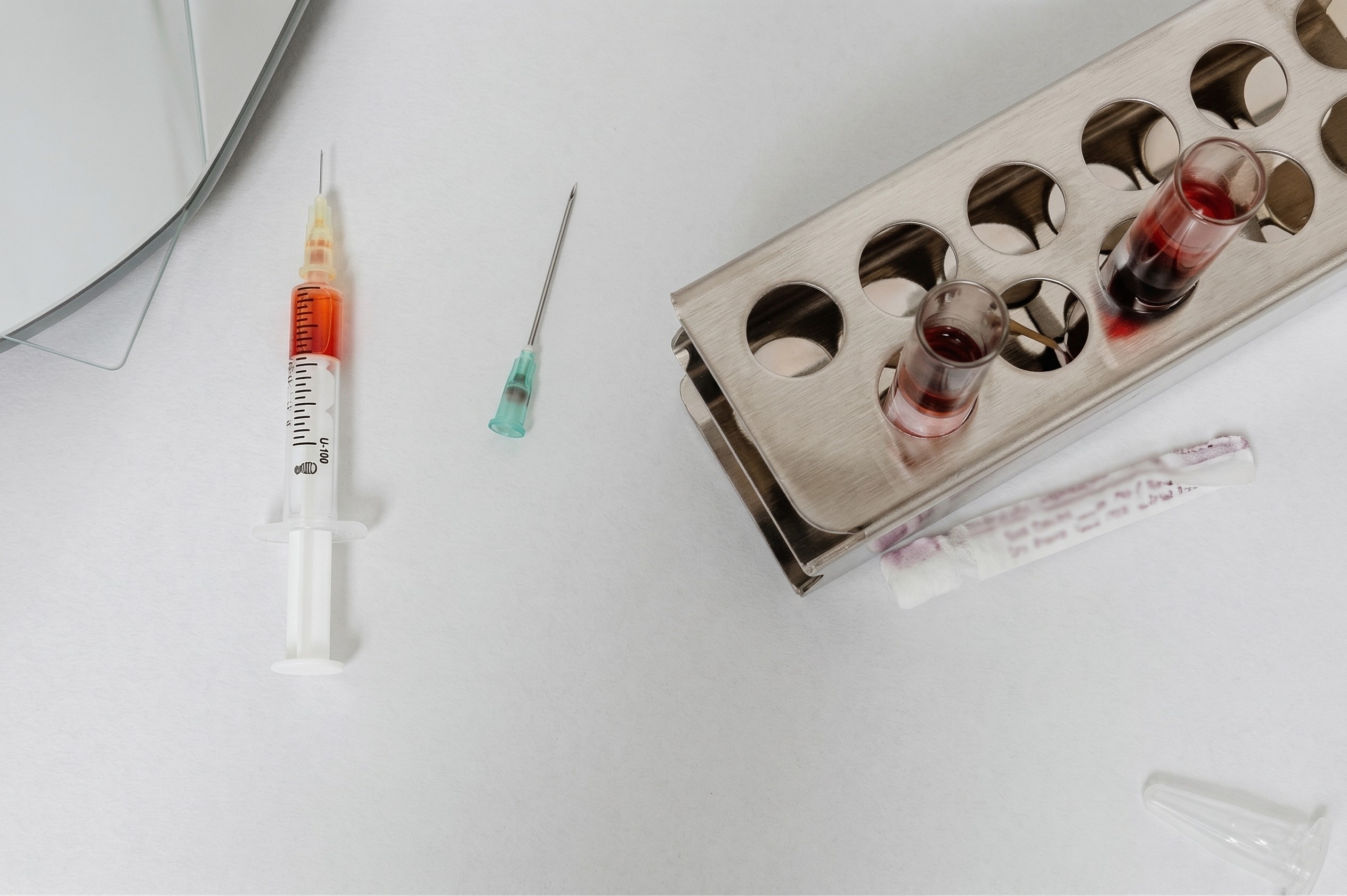
Every year, an estimated 3.5 million needlestick injuries occur among healthcare workers globally, according to the World Health Organization (WHO). Behind each statistic is a healthcare professional who faced potential exposure to life-threatening blood-borne pathogens — often due to gaps in training, inadequate equipment, or failure to follow established safety protocols.
This article summarises the WHO's core best practice guidelines for the safe handling and disposal of sharps in clinical settings, providing practical guidance for healthcare administrators, infection control officers, and frontline staff.
WHO Position: Needlestick and sharps injuries are largely preventable. The majority of occupational exposures to blood-borne pathogens can be eliminated through the consistent application of standard precautions, safety-engineered devices, and proper waste disposal infrastructure.
Understanding Standard Precautions
The foundation of all sharps safety in clinical settings is Standard Precautions — the WHO's baseline infection prevention strategy. Standard Precautions treat all blood, body fluids, secretions, and excretions as potentially infectious, regardless of the patient's known or suspected diagnosis.
For sharps specifically, Standard Precautions mandate:
- Never recap used needles by hand (two-handed technique strictly prohibited)
- Do not bend, break, or otherwise manipulate used needles
- Immediately discard used sharps into an appropriate certified container at the point of use
- Never carry loose sharps in hands, pockets, or on trays without a rigid container
- Containers must be puncture-resistant, leak-proof, and labelled with the biohazard symbol
Critical rule: Two-handed needle recapping is the single most preventable cause of needlestick injury in clinical settings. It must be eliminated entirely — not reduced, but eliminated.
The Hierarchy of Controls for Sharps Safety
WHO recommends applying the internationally recognised Hierarchy of Controls to sharps injury prevention. This framework prioritises the most effective interventions first, working down to personal protective measures as a last line of defence:
Where clinically possible, replace sharps procedures entirely — e.g., oral medication instead of injection, needleless IV systems, or transdermal drug delivery. Elimination is the most effective control.
Use sharps with built-in injury prevention features: retractable needles, auto-disabling syringes, needle-shielding lancets, and blunt-tip suture needles. Certified sharp containers are also an engineering control — they must be positioned at every point of use.
Implement mandatory sharps safety training, written protocols for handling and disposal, regular audits of container fill levels, clear post-exposure reporting procedures, and non-punitive incident reporting culture.
Adopt one-handed needle recapping where recapping is unavoidable (e.g., using a scoop technique or single-hand wall mount), passing sharps in a neutral zone, announcing sharps transfers verbally, and conducting procedures in good lighting.
Gloves, eye protection, and gowns reduce the consequences of exposure but do not prevent the sharps injury itself. PPE is the last resort in the hierarchy, not the first line of defence.
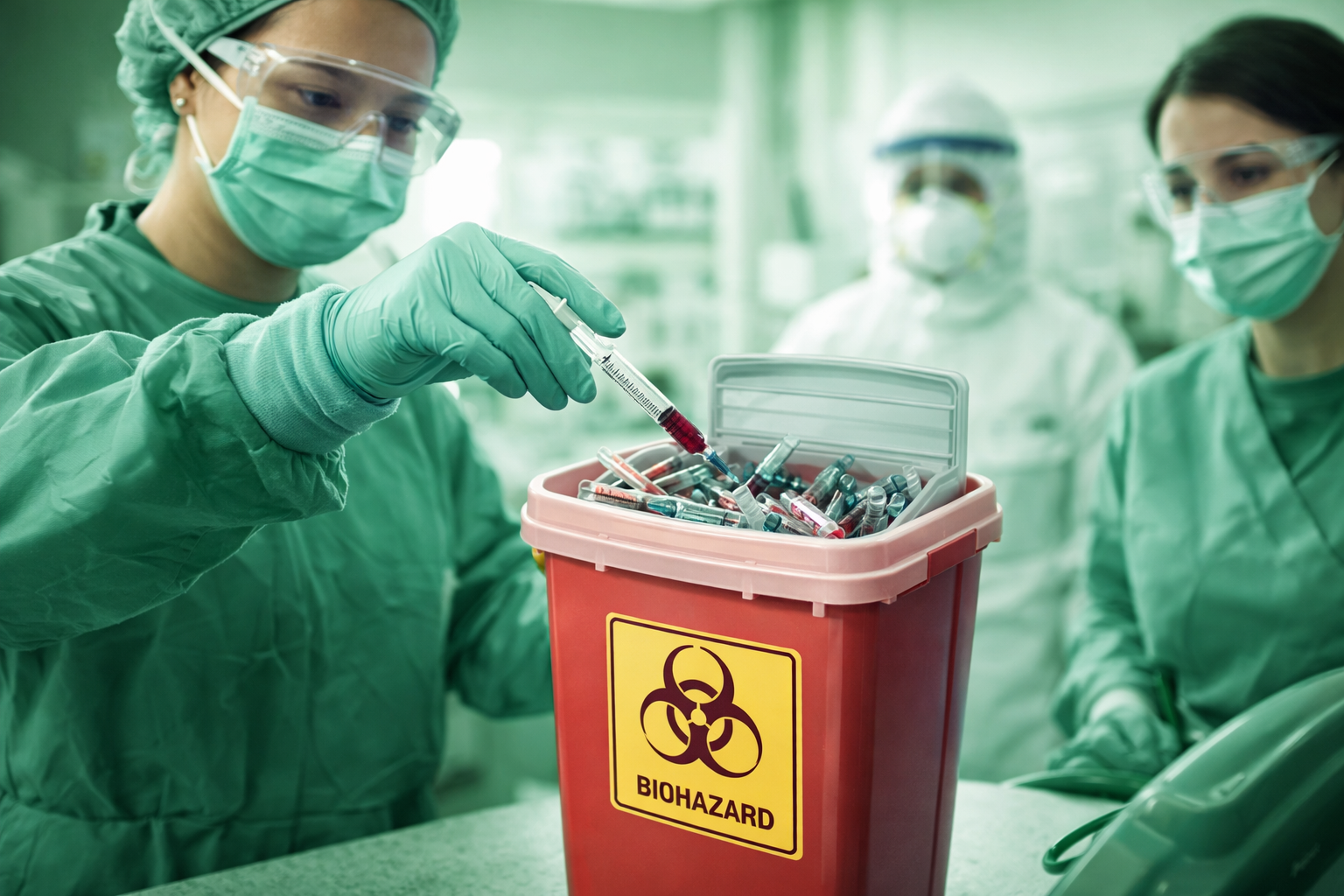
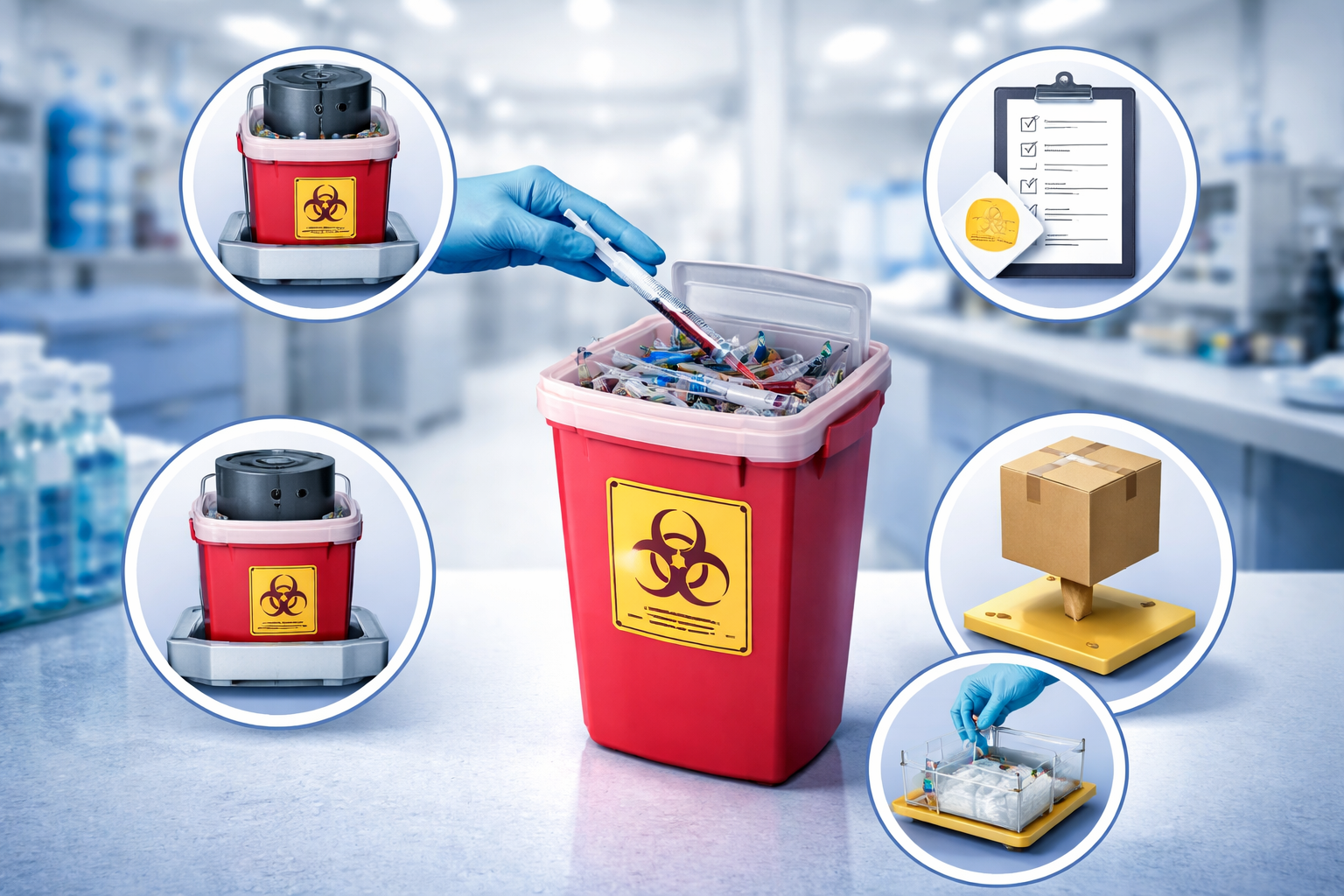
Fig. 1 — Proper sharps handling protocols protect healthcare workers from preventable blood-borne pathogen exposure.
WHO Requirements for Sharp Containers
The WHO sets clear specifications for sharp waste containers. Containers that do not meet these requirements should not be used in clinical settings, regardless of cost considerations:
| Requirement | WHO Specification | YM Medic Container |
|---|---|---|
| Puncture resistance | Must resist needle penetration from inside and outside | ASTM D4169 Verified |
| Leak-proof | No leakage under normal use and transport | Sealed base & lid |
| Tamper-evident closure | Permanent seal when closed — cannot be reopened | Snap-lock closure |
| Fill-line indicator | Visual indicator at 75% capacity — do not overfill | Printed fill line |
| Biohazard labelling | International biohazard symbol clearly marked | Compliant labelling |
| One-handed operation | Opening must be operable with a single hand | One-hand entry port |
| Stable base | Container must not tip over during use | Wide-base design |
Container Placement: Point-of-Use Rule
One of the most consistently cited contributing factors in needlestick incident reports is inadequate container placement. WHO guidance is explicit: sharp containers must be located at the point of use — not in the corridor, not on the nurse's station, but within arm's reach of where the sharps procedure is performed.
Studies consistently show that when a healthcare worker must walk more than one or two steps to reach a container, the likelihood of carrying a live needle — or worse, attempting to recap it — increases dramatically.
The Complete Disposal Chain
Safe sharps management does not end at the container. WHO guidelines address the full disposal chain from clinical use to final treatment:
- Point of generation — immediate disposal into a certified container at point of use
- Collection — sealed containers collected by trained waste handlers in appropriate PPE
- Segregation — sharp waste kept separate from other medical and domestic waste streams
- Storage — sealed containers stored in a locked, designated waste holding area
- Transport — containers transported in rigid, labelled outer packaging; never by hand
- Treatment — autoclaving, incineration, or encapsulation per national regulatory requirements
- Final disposal — treated residue disposed of in licensed sanitary landfill or safe burial pit
In Malaysia, medical waste disposal is regulated under the Environmental Quality Act 1974 and the Scheduled Wastes Regulations 2005. Healthcare facilities must use licensed contractors for collection and treatment of clinical waste including sharps.
Post-Exposure Management
Despite best precautions, sharps injuries will still occur. The WHO stresses that every healthcare facility must have a documented post-exposure management protocol that is accessible at all hours and known to all staff:
- Immediate first aid — wash wound with soap and water for at least 15 seconds; do not squeeze or suck the wound; flush splashes to eyes or mouth with clean water
- Report immediately — report to supervisor and occupational health within 2 hours; delay reduces effectiveness of prophylaxis
- Assess source patient — determine HBV, HCV, and HIV status of source patient if available and consented
- Post-exposure prophylaxis (PEP) — HIV PEP must commence within 72 hours; HBV immunoglobulin within 24–48 hours if not vaccinated
- Follow-up testing — baseline and follow-up testing for HBV, HCV, HIV at 6 weeks, 3 months, and 6 months
- Documentation — formal incident report filed; used for surveillance and prevention improvement
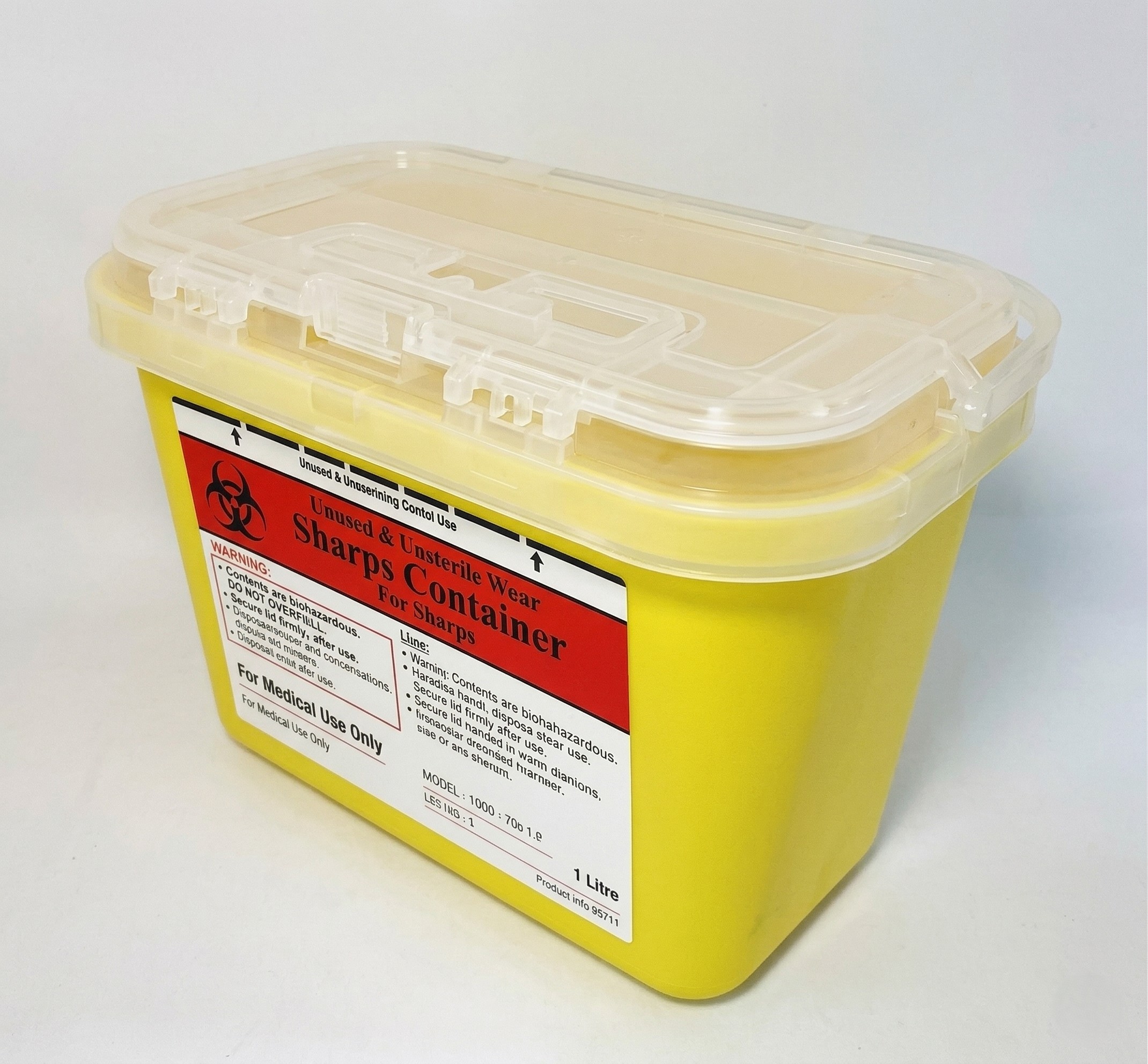
Fig. 2 — YM Medic Sharp Container positioned at point of use — meeting WHO placement guidelines for bedside and clinical use.
Staff Training Requirements
WHO recommends that sharps safety training be mandatory, documented, and repeated annually for all clinical staff. Training programmes should cover:
- Recognition and classification of sharp waste
- Standard Precautions and the hierarchy of controls
- Correct use of safety-engineered devices
- Proper container selection, placement, and replacement
- One-handed disposal technique — demonstrated practically
- Post-exposure protocol — location of PEP resources, who to call, documentation
- Incident reporting procedures and the importance of non-punitive reporting
New staff — including students, temporary hires, and redeployed personnel — must complete sharps safety induction before commencing any clinical duties. This is a non-negotiable requirement under WHO guidelines.
Sharps Safety in the Malaysian Context
Malaysian healthcare facilities are required to comply with the Ministry of Health (MOH) Malaysia's Guidelines for the Management of Clinical Waste in Malaysia, which aligns closely with WHO recommendations. Key locally-relevant requirements include:
- Use of containers compliant with MS 2558 (Malaysian Standard for disposable medical sharp containers)
- Biohazard labelling in both English and Bahasa Malaysia
- Waste manifests and contractor records maintained for a minimum of 2 years
- Annual occupational health reporting to the Department of Occupational Safety and Health (DOSH)
- Vaccination requirements — HBV vaccination recommended for all healthcare staff with direct patient contact
Conclusion
The WHO's best practices for sharps safety are not aspirational guidelines — they are evidence-based standards built on decades of occupational health data. Healthcare institutions that implement the full hierarchy of controls, maintain certified containers at every point of use, and invest in ongoing training can reduce their sharps injury rates by up to 80%.
YM Medic Sdn Bhd is committed to supporting Malaysian and international healthcare facilities with ASTM D4169 and MS 2558-compliant sharp containers that meet every WHO specification for puncture resistance, one-handed operation, tamper-evident closure, and fill-line indication. Protecting your healthcare team starts with the right container in the right place.
.png)
Leave a Comment
Share your thoughts or questions